


Today, I cried.

Today, I cried.
I’m not a crier. Not because I think tears are off limits, or that they make me weak, or somehow less of a man. There just aren’t many things in life that take me there. And it’s never once been something from a news feed.
That held true until I glanced at a notification during a meeting. I did exactly what I coach leaders not to do — turned my phone over, screen side up, and read these words:
“Dolly Parton dies at 80.”
We were thirty minutes into a sixty-minute call. For me, the call was over. And honestly, so was my day. (Sorry, William and Rob. I was on screen, but I wasn’t really there.)
A celebrity headline doesn’t usually earn a pause from me, let alone a full stop. So why this one?
I only came close to Dolly once. I was a teenager at Dollywood in Pigeon Forge with a high school group. The day’s highlight was a parade, Dolly on the back of a convertible, looking like a million bucks, flashing that smile that could knock your socks off.
But her beauty isn’t why the world is a little less of a happy place today. It was the beauty inside.
Dolly was timeless. She wrote something like three thousand songs, including a handful of the biggest in popular music history. She built a theme park in the same hills where she grew up poor, aiming to become the county’s biggest employer — the whole thing, just so her neighbors would have good jobs. Goal accomplished. She became an icon while she was still alive to see it, and she did it all her own way.
Her honesty was brutal, and most of it was aimed at herself. She always said her whole look came from a woman in Sevierville the town wrote off as trash — the bright lipstick, the piled-up hair, the tight clothes — and that as a little girl, she thought that woman was the most beautiful thing she’d ever seen. She never denied a single procedure. She made the jokes first, before anybody else got the chance.
Here’s what I keep coming back to. She may have been the most visibly artificial person in any room she ever walked into, and she was almost always the most real one in it.
That’s not a contradiction. That’s the entire lesson.
Most of us run it the other way around. We work to look natural and hide the machinery — the coaching, the rehearsal, the effort, the doubt. Dolly put the machinery on the outside, laughed at it, and left the inside untouched. She spent zero energy performing authenticity, which is why she had so much of the real thing.
She started the Imagination Library in 1995 because her own father couldn’t read. It mails free books to children every month, from birth until they start school. Hundreds of millions of books, in multiple countries, to families who never had to fill out a hardship form or prove they were poor enough to qualify.
When the wildfires tore through Gatlinburg in 2016, she wrote checks — a thousand dollars a month, for six months, to every family that lost a home.
She gave a million dollars to Vanderbilt for research that helped produce a COVID vaccine, and said almost nothing about it until somebody else did. She paid kids to stay in school.
None of it was a campaign. There was no hashtag. She never once made you the audience for her generosity.
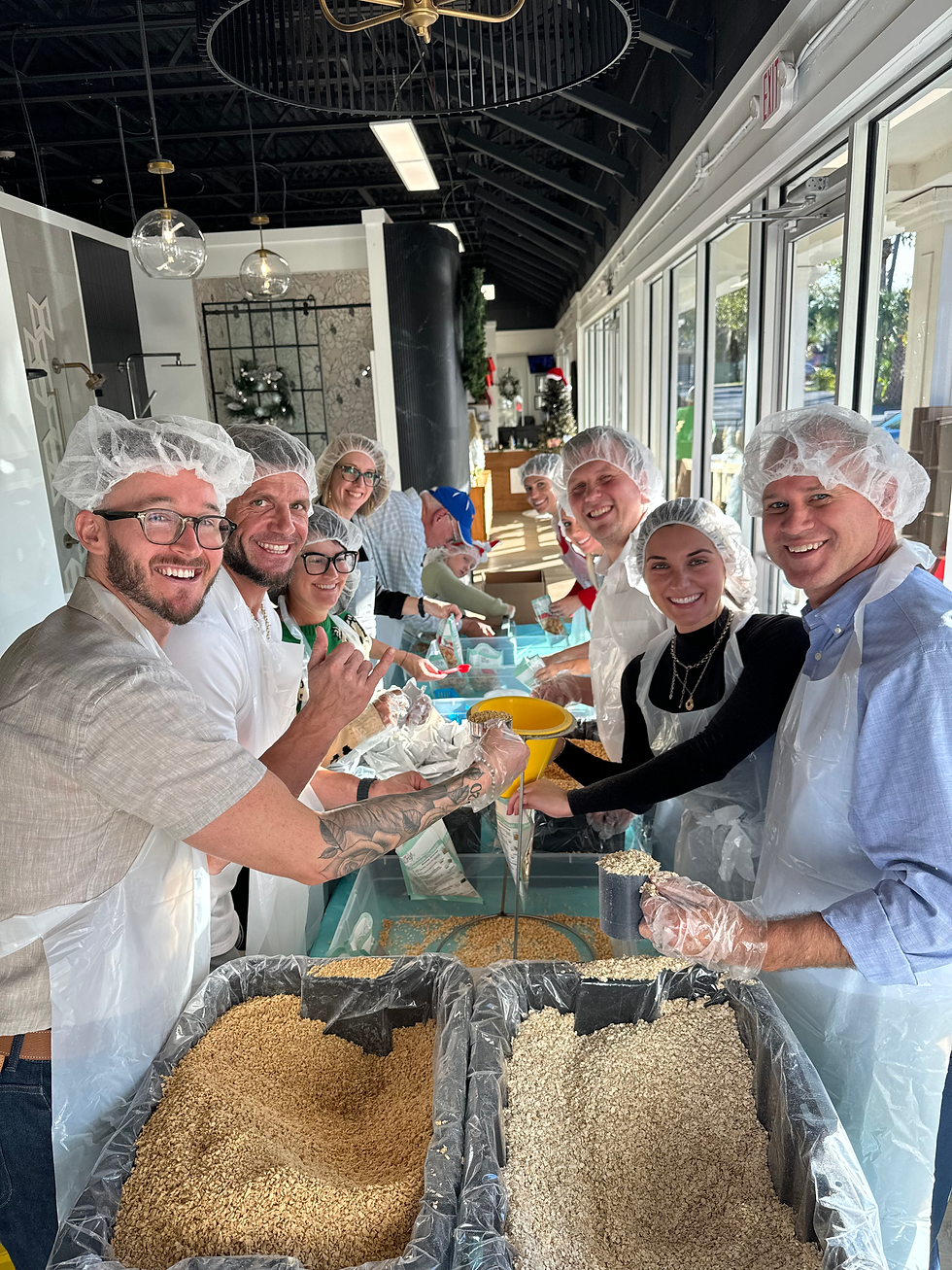
Outside of the few consultancies I maintain, I spend my working life trying to get food to kids who don’t have enough of it. So maybe that’s the answer about the tears.
Or maybe it’s the blonde tabby kitten asleep on my desk as I write this. We adopted her last Christmas. Her name is Dolly. I offer no defense.
Dolly is a big part of why people like me believe work like mine is possible at scale — come from nothing, build something enormous, then spend the rest of your life quietly handing it back. She proved you don’t have to choose between wildly successful and completely decent. She made them look like the same thing.
She even wrote her own goodbye. “I Will Always Love You” was for Porter Wagoner, the man who gave her the first real break of her career and then couldn’t bring himself to let her go. Think about what she did there. She was leaving, and she chose to make the leaving a gift. It is the kindest exit note anyone has ever written. Thank you. I’m going. I love you.
When Elvis wanted to record it, his manager wanted half the publishing. She said no, and cried all night over it. She was right. She kept her songs, the way she kept everything else that mattered — on her own terms.
Her family announced her passing this afternoon, and in the obituary they called it “a rhinestone life that shone bright enough for the world to see.”
I’ve read that line a dozen times now. It’s perfect because it refuses to separate the rhinestones from the light. With Dolly, the sparkle was never the distraction. It was the delivery system.
Here’s why I’m writing this instead of just sitting with it.
Dolly Parton may have been the last person in America that everybody loved. She was our living national treasure.
Consider how strange that is right now. We’re sorted and sifted and sold to in tribes. We’ve gotten very good at finding the one thing about a person that lets us dismiss all the rest. And somehow a woman from a one-room cabin in East Tennessee — unmistakably Christian, and just as unmistakably a defender of people her own church often wouldn’t seat — walked straight through the middle of it for sixty years and came out the other side with her hand still outstretched.
She didn’t manage that by being neutral. She had convictions, and she said them plainly. She managed it by refusing to be cruel. She said more than once that judging people was God’s work and not hers — then she lived like she believed it.
That’s the whole thing. She never asked us to agree with her. She just declined to treat disagreement as a license to be ugly.
So this is not a post asking you to donate or volunteer. Not today.
The ask is smaller than that, and much harder. Be decent to somebody who doesn’t vote the way you do. Give something away and tell no one. Let a person stay complicated instead of filing them away. Do one thing this week for a kid you’ll never meet.
That’s all she did. Over and over, for eighty years, in rhinestones.
I keep seeing that convertible. A teenage kid standing in a crowd in Pigeon Forge, and Dolly on the back of a car, waving.
I don’t think she was waving at the crowd. I think she was waving at every single person in it. Maybe even at me.
That was the trick. And it was never a trick at all.
In a few weeks my kids have fall break, and we’ve got a trip to the Smokies planned. Nothing fancy. Just a cabin in the mountains. Her mountains — the same hills that made her, and the same ones she spent a lifetime paying back.
I thought the changing leaves were going to be the whole point of that trip. Now there’s going to be a little less magic in them. A little less beauty. Maybe a little less sparkle, too.
But I’ll be on a porch in East Tennessee with my family, in the fall, in the mountains she loved. And I’ll get to remind my kids who she was, and what she did, and why it mattered. Why it still matters, even though she’s gone.
Thank you, Dolly. We’ll take it from here.


Comments